
Platform Architecture
The more useful question for someone evaluating a DFRM platform is how it's built — because that determines whether it still works reliably at ten times the current volume, operating across five markets, handling millions of payment events on a given day. Loksiz is cloud-native, built on a distributed architecture that scales horizontally. No single component is a bottleneck.
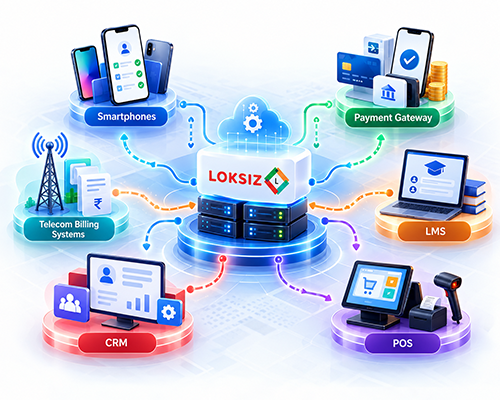
Built for Device Financing at Scale
Not built for a small pilot and expanded later — designed for tens of millions of devices from the start. Adding capacity as the portfolio grows is an operational decision, not an engineering project.
99.99%
Platform Uptime10M+
Devices Supported40+
Markets Enabled24/7
MonitoringHow the Components Fit Together
Mobile SDK
The entry point for device-level control. Embedded into the Android device at point of financing — handles enrollment, payment status sync, and on-device enforcement. Communicates with the platform when online and enforces policy locally when offline.
API Gateway
The interface between client systems and the platform. REST endpoints handle device enrollment, payment events, lock and unlock commands, and data retrieval. Webhooks push real-time events without requiring polling.
Risk Engine
The decision layer. Configured policies — grace periods, thresholds, escalation stages — are evaluated against real-time payment and device data. When a condition is met, the Risk Engine instructs the Device Control Platform to act.
Device Control Platform
The enforcement layer. Receives commands from the Risk Engine and executes lock or unlock actions. Commands queue for offline devices and execute on reconnect — no command is lost.
Analytics Dashboard
The visibility layer for operations and risk teams. Real-time portfolio status, payment monitoring, lock and unlock activity, risk signals, and reporting — updated continuously.
Cloud-Native Infrastructure
Distributed architecture that scales horizontally. Geographic redundancy, continuous availability monitoring, and rolling deployments — no downtime for updates.
Platform Architecture
What the Architecture Was Built Around
Scale From Day One
Real-Time Throughout
Resilience by Design
Composable Integration
Frequently Asked Questions
Common questions about the Loksiz platform architecture, infrastructure, and operational resilience.
Built for Device Financing at Scale
Cloud-native, distributed, and horizontally scalable — designed for tens of millions of devices from the start.