
SDK & Integration
Loksiz provides two primary integration paths: a REST API for server-to-server automation and an Android SDK for device-level control at point of financing. Most clients end up using both — the SDK for enrollment and on-device enforcement, the API for payment sync, lock commands, and portfolio monitoring. Where you start depends on your context.
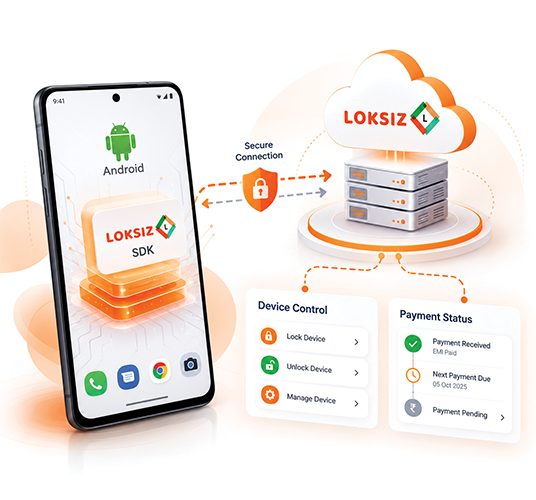
Two Paths. Same Platform. Same Capabilities.
Retailers and smaller teams often begin with the SDK at point of sale and move to full API automation later. Lending institutions and telecoms with existing engineering infrastructure typically start with the API from day one. Both paths lead to the same platform and the same capabilities.
REST
API IntegrationAndroid
SDK Support2 Weeks
Sandbox Integration40+
Markets SupportedWhat Each Integration Path Handles
Device Enrollment & IMEI Registration
Register financed devices at point of sale or via the LMS — linked to the IMEI record from day one, immediately visible in the platform.
Webhook Payment Sync
Payment events ingested in real time via webhooks — every decision based on what's actually happening now, not last night's batch file.
Remote Lock & Unlock Commands
Execute lock and unlock commands through your own systems — no manual approval step, with offline queueing for disconnected devices.
Portfolio Monitoring Endpoints
Portfolio status, risk signals, and audit trail — accessible via API for teams feeding data into their own analytics infrastructure.
On-Device Enforcement (SDK)
The Android SDK embeds device-level control at point of financing — enforcement that works whether the device is online or not. Lightweight footprint, doesn't slow device performance.
LMS & POS Compatibility
The API is LMS-agnostic — connects via standard REST endpoints and webhooks to any lending management or point-of-sale system that supports API connectivity.
From Sandbox to Live
Android SDK Capabilities
Device-Level Enrollment at POS
Offline Lock Execution
Clear Path to Full API Automation
Frequently Asked Questions
Common questions about integrating via the Loksiz REST API and Android SDK.
Integrate in Days, Not Months
REST API and Android SDK — two paths to the same platform, designed to fit your existing stack.